Why pharmaceutical brands need accessibility-first design
Most pharma digital experiences are designed for an idealized user: young, able-bodied, with perfect vision and high-speed internet. This missed opportunity is potentially impacting health outcomes.

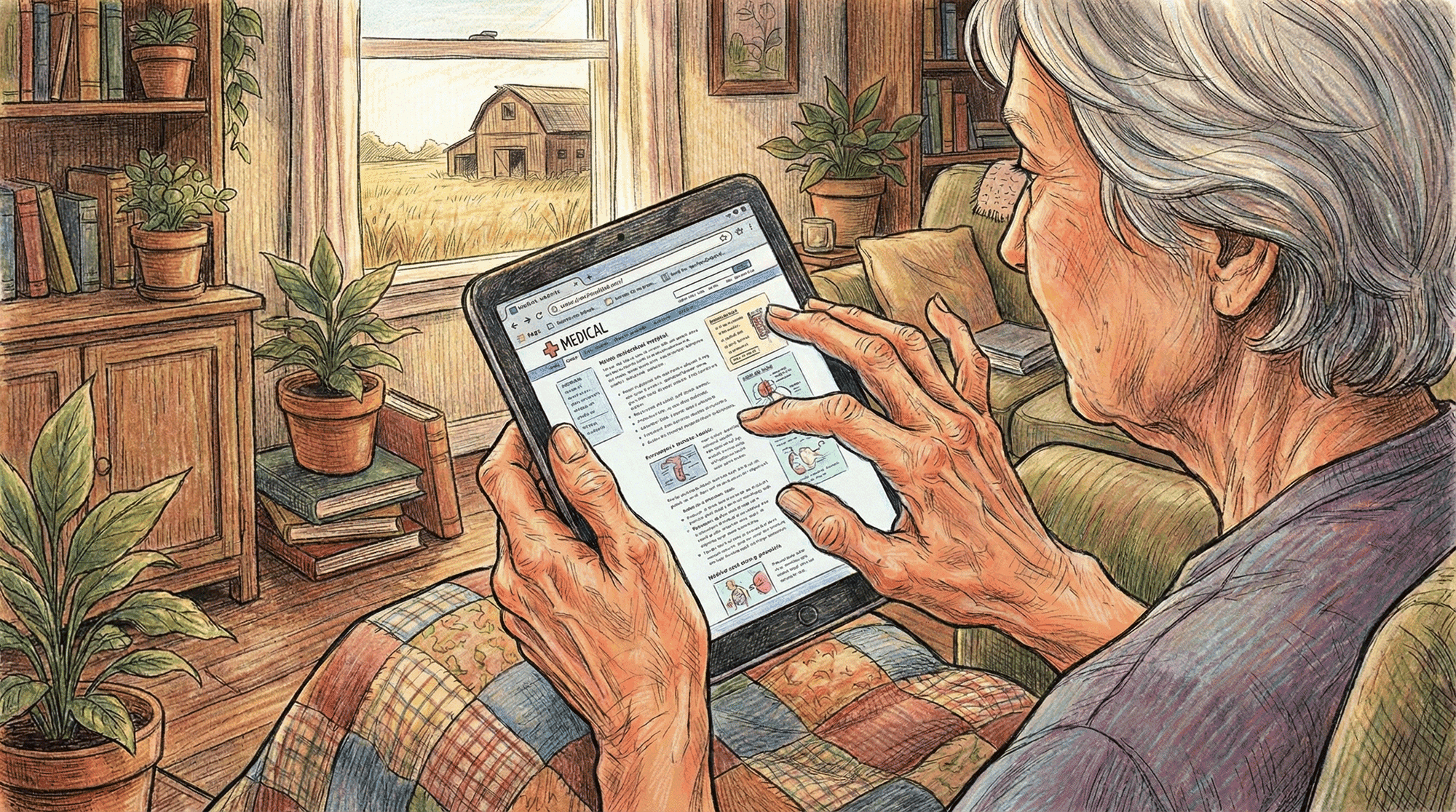
There’s a 68-year-old woman with rheumatoid arthritis sitting on her couch in rural Kansas, trying to research a medication her doctor just prescribed. Her internet connection is spotty, her joints make scrolling painful, and the pharmaceutical website’s tiny gray text swims before her eyes.
After five frustrating minutes, she gives up, never learning about the patient assistance program that could have saved her $500 a month.
This scenario represents one of many opportunities for the pharmaceutical industry to serve patients better through accessibility-first thinking and design.
“If I’m in the middle of nowhere America on a 3G connection, and that campaign image didn’t load, I still need the text to be there on the screen,” explains Jerlyn O’Donnell, VP of experience design at BGB Group. “People forget that medication brand because they couldn’t access the information when they needed it most.”
The trillion-dollar blind spot
According to the World Bank and World Health Organization (WHO), approximately 1.3 billion people — about 16% of the global population — live with a disability. When we factor in temporary impairments like a broken arm, situational limitations like bright sunlight on screens, and age-related changes, nearly everyone will live with a disability at some point in their lives.
Yet most pharmaceutical digital experiences are designed for an idealized user: young, able-bodied, with perfect vision, steady hands and high-speed internet. This missed opportunity is potentially impacting health outcomes.
“Working in pharmaceutical advertising, it’s beyond just understanding the drugs and side effects,” O’Donnell notes. “It’s about the caregivers in certain situations and the patients themselves who are probably in a certain mental state when they access our website.”
Why compliance alone isn’t enough
While the Americans with Disabilities Act (ADA) and emerging state regulations requiring AAA compliance standards are driving change, focusing solely on legal requirements misses the larger picture. Accessible design is about ensuring that critical health information reaches everyone who needs it.
Consider these real-world scenarios O’Donnell encounters in her work:
- Many Americans read at a 5th-grade level, yet pharmaceutical content often requires college-level comprehension.
- Millions struggle with visual-only content like color-coded charts or small text (One in 12 men and 1 in 200 women live with color blindness). Many others suffer from low vision, macular degeneration and complete blindness.
- Patients may miss critical information in video content without captions or transcripts if they suffer from age-related hearing loss, deafness or temporary conditions.
- Motor challenges affect some 5.8 million U. S. adults and conditions like arthritis, Parkinson’s disease, muscular dystrophy or even a broken arm can make precise clicking, scrolling or tapping difficult or impossible.
- Patients processing a new diagnosis can experience cognitive load when dealing with brain fog from treatments. Those who are managing conditions like ADHD may struggle with complex navigation or information overload.
- Rural communities experiencing technical constraints often have limited internet connectivity, making image-heavy sites inaccessible.
O’Donnell shares a particularly revealing moment, in which she was presenting about accessibility at an agency event and discussed adding textures to colored charts.
“A copywriter approached me and said, ‘I am so happy you spoke about this because I am colorblind and sometimes I have to look at charts close up,’” she explains. “That’s when you realize these aren’t edge cases. These are our colleagues, our clients and our patients.”
The integrated approach: everyone’s responsibility
What makes O’Donnell’s approach unique is her vision for embedding accessibility thinking throughout the creative process, not treating it as an afterthought.
"Instead of me remediating a PDF after the fact, there could be a designer who’s already preparing it with the proper tags,” she says. “It’s about making accessibility part of everyone’s job, not creating a single point of failure."
This integrated approach transforms accessibility from a technical checkpoint into a creative opportunity. When teams consider diverse users from the start, they often create cleaner, more intuitive designs that benefit everyone, a phenomenon known as the “curb-cut effect.”
AI: The game-changer for health communications
Perhaps most exciting is the evolution of AI’s ability to democratize access to health information. O’Donnell envisions AI tools that could automatically simplify complex medical language to appropriate reading levels, making dense clinical information digestible for patients with varying educational backgrounds.
These same tools could create audio descriptions of visual content in real-time, ensuring that charts, infographics and diagrams aren’t barriers to understanding for people with visual impairments.
She sees some of this technology already working while beta testing tools. Having graduated from Rochester Institute of Technology (home to the National Technical Institute for the Deaf), O’Donnell has long understood how technology can break down accessibility barriers. The advances she’s witnessed for the deaf community show what’s possible when innovation meets inclusion.
The potential extends to generating multi-modal formats for different learning styles and abilities. Some patients might better understand their treatment options through interactive simulations, while others need simple, step-by-step text instructions. AI could personalize content delivery based on individual needs and preferences.
“AI will play a role in documenting the patient journey,” O’Donnell predicts. “It can help us understand where people get stuck and automatically suggest improvements.”
This continuous learning loop means accessibility solutions will evolve alongside patient needs, creating increasingly intuitive experiences over time.
Practical steps forward
For pharmaceutical companies ready to embrace accessibility-first design, O’Donnell recommends starting with the following fundamentals.
- Audit existing assets: Use automated tools to identify quick wins in your current digital properties. For example, when checking color contrasts for vision, there are many tools like WebAIM that are free for the digital space.
- Train your teams: Accessibility awareness shouldn’t be limited to developers. Include designers, writers and strategists. Have your developers learn about ARIA (Accessible Rich Internet Applications), and your writers about person-first language. Encourage your strategists to establish clear goals to reach people they know and don’t know yet.
- Design for extremes: If it works for users with disabilities, it will work better for everyone. Following established guidelines like Web Content Accessibility Guidelines (WCAG) makes it achievable.
- Test with real users: Include people with disabilities in your user research and testing.
- Build it into process: Make accessibility a standard part of your creative brief, not an afterthought. Any effort matters and is much more cost-effective if considered early.
The beautiful misconception
There’s a misconception that making things accessible is not beautiful, O’Donnell observes. This myth holds many brands back, but she insists that the opposite is true, pointing out that inclusive design constraints often lead to “cleaner, more intuitive designs that benefit everyone.”
O’Donnell points to real-world client work to prove the point. For example, she recounts how an accessibility audit for one major pharmaceutical brand resulted in a 12% traffic increase, stronger user trust metrics, and saw a rarely used discussion guide become a top-clicked resource.
In another case, adding simple features like chapter navigation and captions to videos significantly boosted engagement rates across all demographics, moving well beyond just users with hearing or visual impairments. As these stories show, small, accessibility-focused changes can create significant and widespread impact.
Looking ahead to a new standard of care
As our population ages and digital health becomes increasingly critical, accessibility can no longer be an afterthought in pharmaceutical marketing. It’s not about special accommodations for a small group. It’s about ensuring vital health information reaches everyone who needs it, regardless of their abilities or circumstances.
“It’s opening it up to more people,” O’Donnell says simply. And in healthcare, opening up access isn’t just good business — it’s the right thing to do.
The companies that recognize this shift now — building accessibility into their DNA rather than retrofitting it later — will be the ones truly serving patients in our digital health future. The question isn’t whether to make pharmaceutical communications accessible; it’s whether you’ll lead the change or be left behind.